

Indigo Suits Men


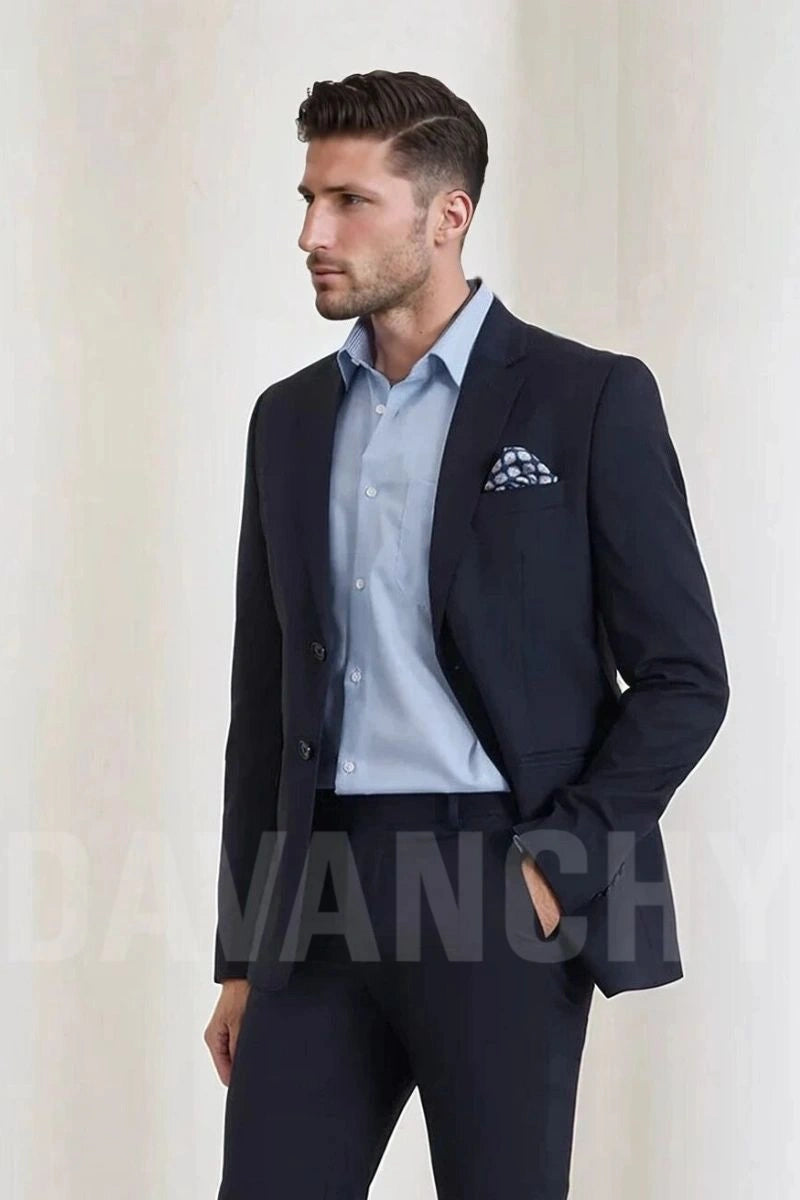
The Art of the Indigo Suit: A Master Tailor’s Guide to Bespoke Elegance
In the world of high-end tailoring, few colors command as much respect and versatility as indigo. Often misunderstood as a simple "navy," true indigo occupies a unique space in a gentleman's wardrobe. It is deeper than royal blue but more vibrant than midnight navy, offering a rich, dimensional hue that adapts to the lighting of a boardroom or the soft glow of a gala.
At Davanchy, we don't just cut cloth; we sculpt a silhouette. When we discuss Indigo Suits Men look for today, we are talking about a garment that bridges the gap between traditional authority and contemporary flair.
Why Indigo is the Ultimate Power Move
As a master tailor, I often see clients gravitate toward charcoal or standard black for their first bespoke commission. While those have their place, indigo is the true workhorse of the sartorial world.
-
Universal Flattery: Indigo carries both warm and cool undertones, making it one of the few shades that complements every skin tone, from fair to deep mahogany.
-
Fabric Depth: Unlike flat dyes, indigo-toned wools—especially those from mills like Loro Piana or Vitale Barberis Canonico—possess a "high-low" visual texture that catches the light beautifully.
-
Transition Mastery: It is the only suit color that looks just as appropriate with a crisp white shirt and silk tie as it does with a fine-gauge merino turtleneck.
The Davanchy Standard: Construction and Craftsmanship
When you invest in Indigo Suits Men, you aren't just buying a color; you are investing in a legacy of construction. A premium suit is defined by what you cannot see—the internal architecture.
1. The Canvas: Full vs. Half
At Davanchy, we advocate for a Full Canvas construction. This involves a layer of horsehair and camel hair stitched between the fabric and the lining. Over time, the heat from your body allows this canvas to mold to your specific torso shape. A bespoke indigo suit becomes more comfortable the more you wear it, unlike "fused" (glued) off-the-rack options that remain stiff and eventually bubble.
2. The Lapel Roll
Look closely at a Davanchy suit. You’ll notice the lapel doesn't just fold flat; it "rolls." This is achieved through thousands of tiny pick-stitches that create tension, giving the chest a three-dimensional, masculine swell. For indigo fabrics, we often recommend a 6cm to 8cm notch lapel for business, or a peak lapel if you want to emphasize height and shoulder width.
3. Functional Details (The Surgeon’s Cuff)
A hallmark of bespoke tailoring is the functional buttonhole on the sleeve. While rarely unbuttoned, the "Surgeon's Cuff" is a silent signal of quality. In our indigo collections, we often use a slightly contrasting thread—perhaps a midnight navy or a subtle silk twist—to finish the last buttonhole, adding a touch of "sprezzatura."
Selecting the Right Fabric for Your Indigo Suit
The weight and weave of your fabric dictate the suit's "drape." As a tailor, I categorize indigo selections into three primary buckets:
The Year-Rounder (Super 110s - 130s Wool)
For most men, a Super 130s wool is the "sweet spot." It is fine enough to feel luxurious against the skin but durable enough to withstand the friction of daily wear. In an indigo hue, this weave provides a subtle sheen that looks professional and sharp.
The Summer Indigo (Linen & Silk Blends)
Indigo takes exceptionally well to linen. The natural slubs in the linen fiber create a variegated color profile, making the suit look relaxed yet expensive. We often recommend an indigo linen-silk-wool blend for destination weddings; you get the breathability of linen without the excessive wrinkling.
The Winter Texture (Flannel & Tweed)
When the temperature drops, a heavy indigo flannel is unmatched. The "napped" surface of the wool softens the blue, creating a cozy, sophisticated aesthetic that pairs perfectly with brown suede Chelsea boots.
Styling Your Indigo Suit: Advice from the Cutting Table
Tailoring is only half the battle; styling completes the story. Because Indigo Suits Men can wear are so versatile, the possibilities are nearly endless.
-
The Power Look: Pair your indigo suit with a crisp white poplin shirt, a semi-spread collar, and a burgundy grenadine tie. The contrast between the deep blue and the red is a classic "power" combination.
-
The Modern Minimalist: Opt for a pale blue micro-stripe shirt and a navy knit tie. This monochromatic approach elongates the body and looks incredibly sophisticated in creative professional environments.
-
Footwear Matters: Indigo is best friends with Dark Oak or Oxblood leather. Avoid stark black shoes unless the event is strictly formal; the richness of a dark brown calfskin brings out the hidden warmth in the indigo dye.
Tailoring for Your Body Type
No two bodies are the same, and bespoke tailoring is the art of camouflaging "flaws" while highlighting strengths.
-
For the Athletic Build: We cut the trousers with a slight taper and keep the jacket waist suppressed to highlight the "V" shape of the torso.
-
For the Shorter Gentleman: We raise the buttoning point (the "gorge") slightly. This draws the eye upward, creating the illusion of a longer torso.
-
For the Larger Frame: We utilize a double-vented back and a slightly wider lapel to maintain proportion. A vertical pinstripe in indigo is also a fantastic choice for a slimming effect.
Frequently Asked Questions
Q1. Is indigo the same as navy?
Not exactly. While they belong to the same family, indigo is typically a more vibrant, saturated blue with a hint of violet or "true" blue. Navy is often much darker, sometimes appearing almost black in low light. Indigo is generally considered more contemporary and visually interesting.
Q2. How often should I dry clean my indigo suit?
Rarely. Harsh chemicals break down the natural oils in the wool and can dull the indigo pigment. Instead, brush your suit with a horsehair brush after each wear to remove dust and hang it on a wide cedar hanger. Only dry clean if there is a visible stain or once a season.
Q3. Can I wear an indigo suit to a Black Tie event?
Technically, no. "Black Tie" requires a tuxedo (usually black or midnight blue) with silk or grosgrain facings. However, for "Black Tie Optional" or "Cocktail" events, a high-quality indigo suit with a white shirt and a dark silk tie is a perfectly acceptable and stylish alternative.
Conclusion: The Davanchy Difference
A suit is more than just clothing; it is your suit of armor. At Davanchy, we combine centuries-old tailoring traditions with a modern understanding of fit and fabric performance. Our Indigo Suits Men collection is designed for the individual who refuses to settle for "good enough."
Whether you are preparing for the boardroom, a wedding, or a high-stakes social event, our master tailors are ready to craft a garment that fits your body and your lifestyle perfectly.
Experience the pinnacle of sartorial excellence.Explore the Davanchy Indigo Collection & Book Your Fitting Today
BLOGS & NEWS
View all

