

Vintage Suits for Men




Embrace Timeless Elegance With Our Men's Vintage Suit Collection
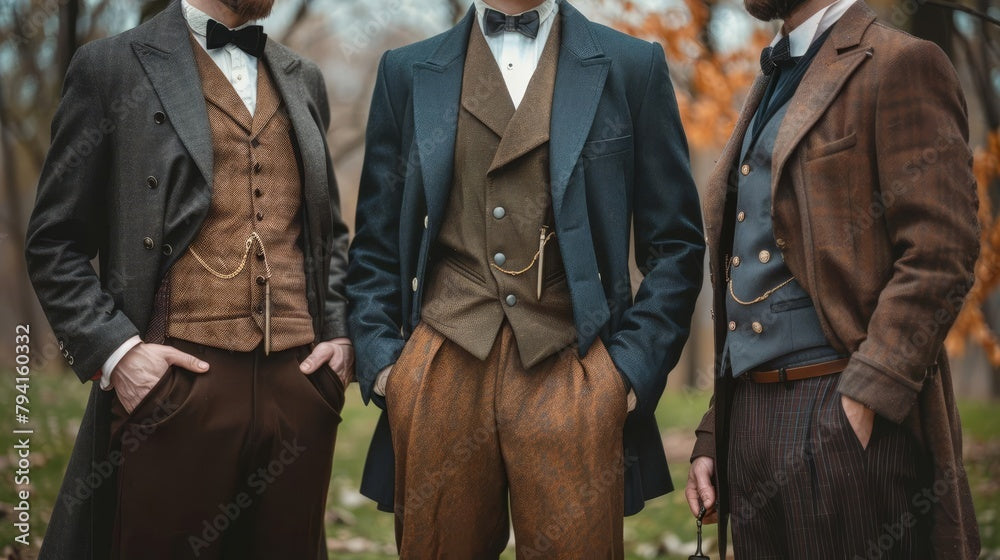
The golden age of menswear introduced a standard of sartorial excellence that continues to influence modern fashion. The vintage suit, drawing heavy inspiration from the impeccably tailored silhouettes of the 1920s and 1930s, offers a robust, deeply masculine aesthetic that stands in striking contrast to the minimalist trends of recent decades. Characterized by heavier fabrics, structured shoulders, and intricate detailing, a vintage-inspired suit is a testament to the enduring power of classic British and Italian tailoring. At Davanchy, our collection of men's vintage suits meticulously bridges the gap between historical authenticity and contemporary wearability. We have refined the sweeping lapels and classic waistcoats of the past, tailoring them to flatter the modern physique. Whether you are dressing for a heritage-themed wedding, a distinguished social event, or simply wish to elevate your daily wardrobe with a touch of historic grandeur, our collection provides an uncompromising standard of elegance.
The Defining Characteristics of Vintage Tailoring
What distinguishes a vintage-style suit from a standard contemporary business suit is a specific set of architectural details. These elements were originally designed for both supreme elegance and practical functionality, creating a commanding profile.
The Essential Three-Piece Silhouette
The cornerstone of early 20th-century tailoring is the three-piece ensemble. A vintage suit is rarely worn without its accompanying waistcoat (vest). Unlike modern, minimalist vests, vintage waistcoats often feature their own lapels—such as a shawl collar or a notch lapel—adding an extra layer of structural complexity and visual interest to the chest. Furthermore, these waistcoats are typically cut slightly higher, designed to meet the high-waisted trousers characteristic of the era.
Assertive Lapels and Structured Shoulders
Vintage jackets are renowned for their assertive proportions. They frequently utilize wide, sweeping peak lapels that draw the eye upward and accentuate the breadth of the chest and shoulders. The shoulders themselves are often more structured and roped than contemporary natural-shoulder suits, creating a sharp, authoritative, V-shaped silhouette that commands immediate attention.
High-Waisted, Pleated Trousers
Perhaps the most notable departure from modern tailoring is the trouser design. Vintage trousers sit at the natural waist (near the navel) rather than the hips. They frequently incorporate single or double forward pleats, which provide extra room through the seat and thighs for superior comfort and a more elegant, fluid drape. They are traditionally finished with a substantial cuff (turn-up) at the hem to add weight to the bottom of the trouser leg, ensuring a razor-sharp crease.
Heritage Fabrics and Classic Patterns
The authenticity of a vintage suit relies heavily on the selection of cloth. Modern, ultra-lightweight synthetic blends cannot replicate the rich drape of historic garments.
Robust Tweeds and Heavyweight Wools
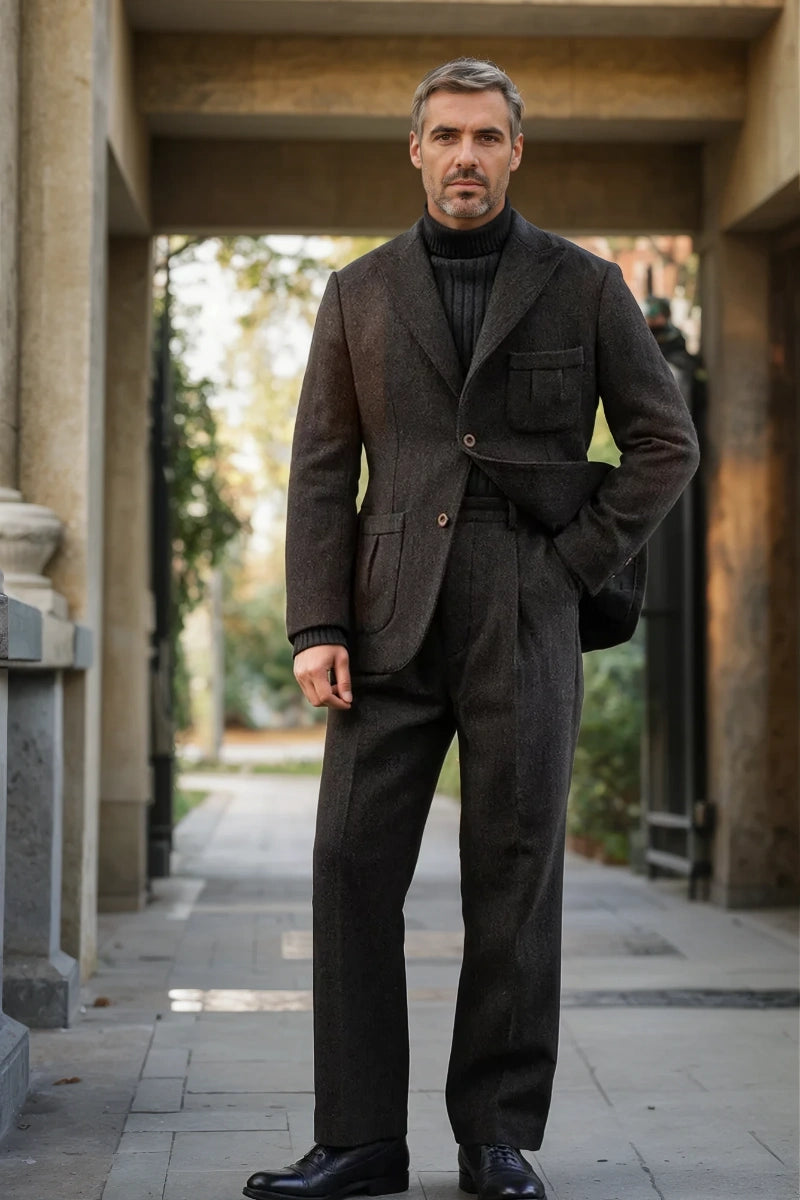
To achieve the correct drape and texture, our vintage suits are crafted from premium, substantial fabrics. Heavyweight worsted wools, textured flannels, and rugged tweeds are the materials of choice. These fabrics not only provide excellent structure and durability but also offer a matte finish that absorbs light, giving the suit a deeply authentic, heritage feel.
Timeless Weaves
The visual identity of the vintage aesthetic is heavily tied to classic British patterns. The subtle zig-zag of a herringbone weave, the rustic charm of Donegal tweed, the geometric boldness of a windowpane check, or the striking contrast of a Prince of Wales check are all hallmarks of the era. These patterns add exceptional depth and character to the garment.
Styling Your Vintage Suit for the Modern Era
Wearing a vintage suit requires a delicate balance; the goal is to channel the elegance of the past without appearing as though you are wearing a theatrical costume.
Modernizing the Fit: While true vintage suits were often cut very generously, our Davanchy collection applies modern tailoring principles to these classic designs. The suits feature a slightly more tapered waist and a cleaner trouser line, ensuring the garment flatters a contemporary silhouette while retaining its historical DNA.
Careful Accessorizing: Accessories will make or break a vintage ensemble. A pocket watch on an Albert chain, a subtle collar pin, or a classic newsboy cap can beautifully complement the suit. However, restraint is crucial—choose one or two heritage accessories, rather than wearing them all at once.
Proper Footwear: A vintage suit demands substantial, classic footwear. Heavy leather brogues (wingtips), cap-toe oxfords, or traditional leather boots are required to visually anchor the heavier fabrics of the suit.
Frequently Asked Questions
1. Can I wear a vintage-style suit to a modern wedding?
Absolutely. A vintage-inspired three-piece suit is an exceptionally stylish choice for a wedding, particularly for the groom or groomsmen. It is particularly appropriate for autumn or winter weddings, rustic venues, or ceremonies with a specific heritage or classic theme.
2. What is the difference between a true vintage suit and a vintage-inspired suit?
A true vintage suit is a secondhand garment manufactured decades ago. While authentic, these often feature outdated proportions, fragile fabrics, and require extensive, costly alterations to fit a modern body. A vintage-inspired suit, like those in the Davanchy collection, utilizes brand-new, premium fabrics and combines classic historical design elements (like peak lapels and pleated trousers) with modern, tailored fits for immediate wearability and durability.
3. Should I wear a belt with a vintage suit?
Historically, and stylistically, it is best to avoid wearing a belt with a high-waisted vintage suit. Belts disrupt the clean lines of the waistcoat and trouser waist. Instead, vintage trousers should be supported by internal side adjusters or traditional button-on suspenders (braces), which ensure the trousers hang perfectly from the shoulders.
4. Are vintage suits appropriate for the office?
This depends on your workplace environment. In highly conservative corporate or finance settings, a standard navy or charcoal two-piece suit is usually required. However, in creative industries, academia, or less strictly formal offices, a vintage-style tweed or herringbone suit is a highly sophisticated and acceptable choice.
BLOGS & NEWS
View all

